



Learn Italian through history – There are many ways to learn a language. You can memorize vocabulary, study grammar, or practice conversation. But the most meaningful way — the one that makes a language come alive — is by living it through history, art, and the real stories that shaped a country. That’s exactly what our students experienced with Marco, when they visited the Museum of the Risorgimento in Milan, just a few steps away from our school, Il Centro – Italian Language and Culture School for Foreigners.
Located in Via Borgonuovo, in the elegant Palazzo Moriggia, the museum offers an incredible journey through time, from the arrival of Napoleon Bonaparte in 1796 to the unification of Italy in 1870. For anyone learning Italian in Milan, it’s not just a museum — it’s a living textbook that connects words with emotions, objects, and events that define Italian identity.
1️⃣ A visit a few steps from school to study Italian through history
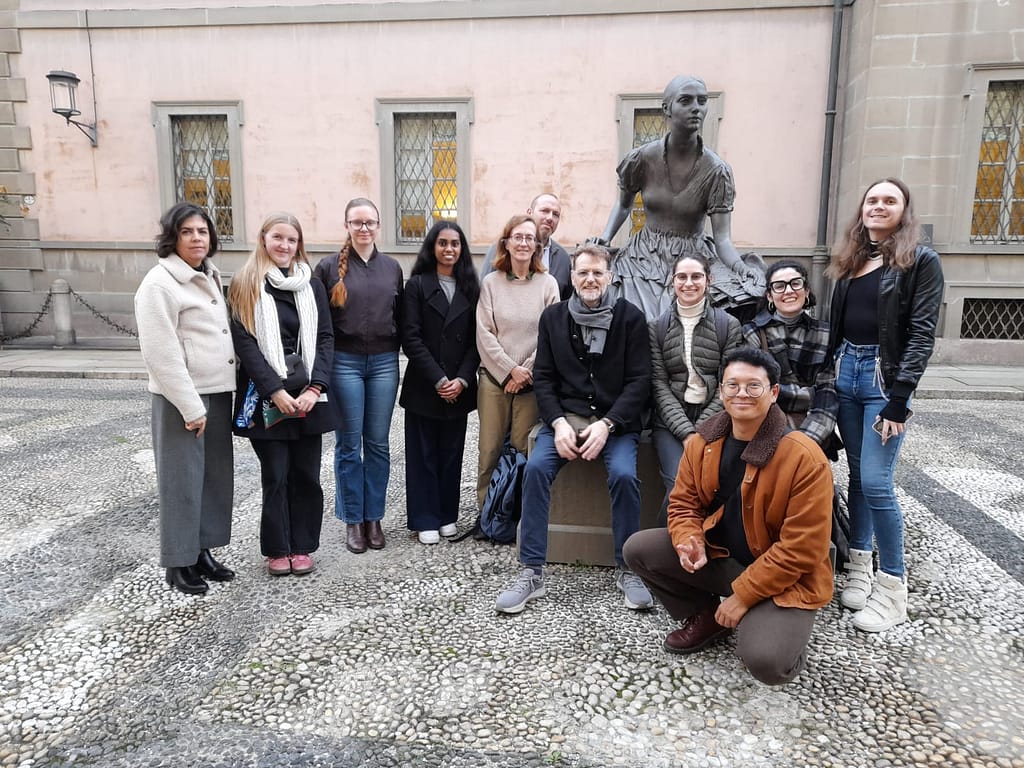
Before going to the Museum, Marco’s Italian lessons had recently covered the topic of Italian history — “il Risorgimento,” the 19th-century movement that led to the birth of modern Italy. The Museum of the Risorgimento is right around the corner from school, in a quiet street between Brera and Montenapoleone.
The museum is housed inside Palazzo Moriggia, a refined neoclassical building designed by Giuseppe Piermarini, the same architect who created Milan’s La Scala theatre. During Napoleon’s rule, it even hosted the Ministry of Foreign Affairs — a perfect symbol of Milan’s central role in European politics of the time.
When we stepped through the courtyard, we noticed how the silence of the building contrasts with the energy of the city outside. Inside, the rooms unfold chronologically, filled with paintings, uniforms, flags, letters, and relics — each one a window into the hopes and struggles of Italians fighting for unity and freedom.
2️⃣ From Napoleon to the birth of Italy
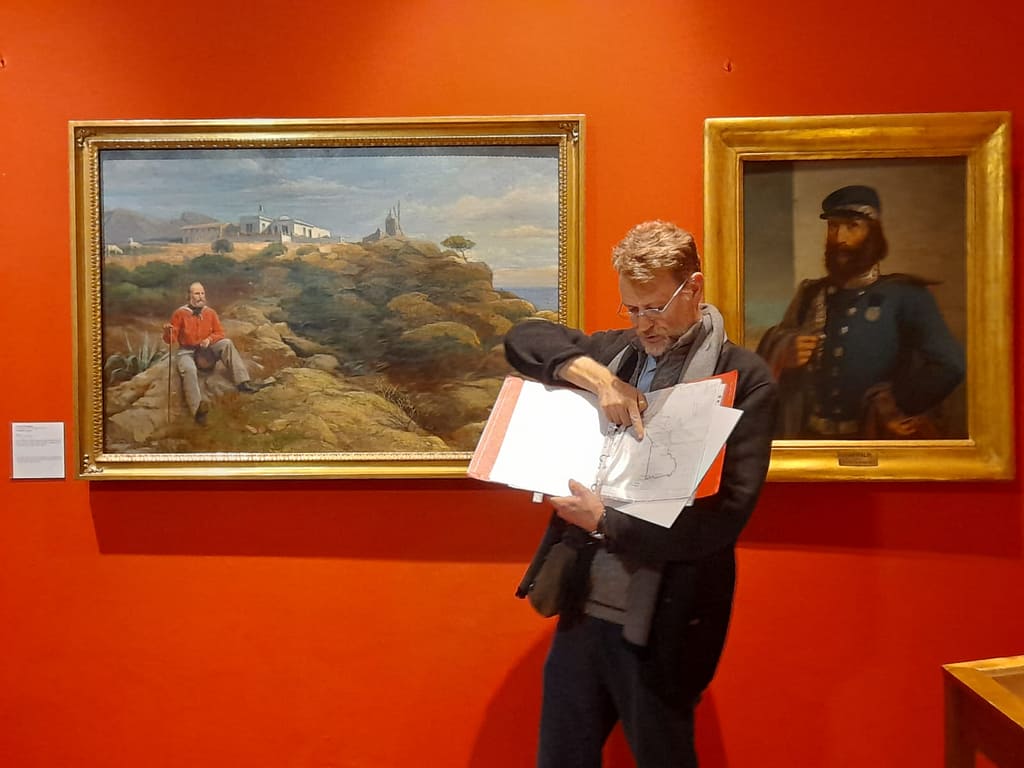
The story begins in the late 18th century, when Napoleon Bonaparte crossed the Alps and entered Milan in 1796. To many Italians, Napoleon represented a new beginning — the idea that liberty and equality could replace centuries of foreign domination. His arrival marked a political and cultural awakening that would later evolve into the Risorgimento.
The museum’s first rooms display portraits of Napoleon, maps of his Italian campaigns, and objects from his reign as King of Italy. Visitors can even see the symbols of the short-lived Cisalpine Republic and later the Kingdom of Italy (1805–1814), both governed from Milan.
To dive deeper into this fascinating era, you can also watch this excellent video on YouTube: Napoleone a Milano – Un liberatore o un razziatore? It offers a detailed look at Napoleon’s complex legacy — visionary leader for some, conqueror for others — and helps you see how much Milan changed under his influence.
3️⃣ The Risorgimento: dreams, revolutions, and heroes
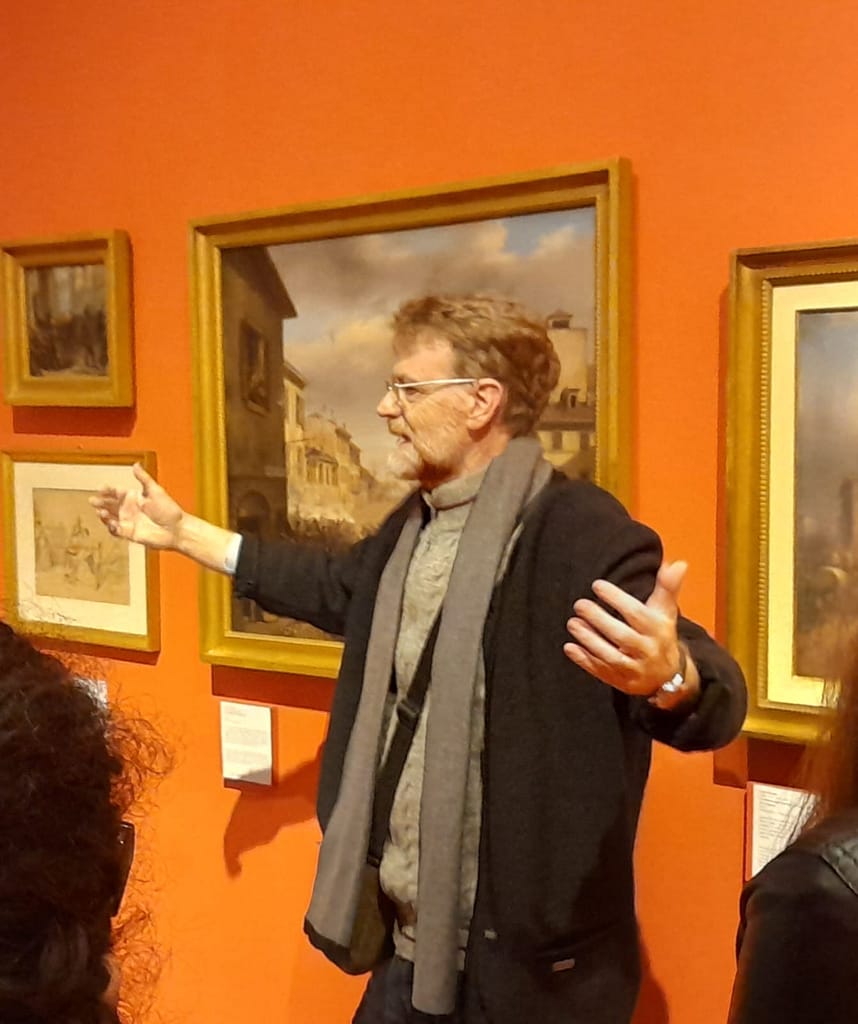
After Napoleon’s fall, Milan came under Austrian control once again, but the ideas he had brought could not be erased. In the following decades, patriots, writers, and ordinary citizens continued to dream of a united Italy. The museum guides visitors through these turbulent years, showing the faces and voices behind the Risorgimento.
In one room, Marco paused before the portraits of Giuseppe Mazzini, Camillo Cavour, and Giuseppe Garibaldi — the “Three Fathers” of the nation. But beyond these well-known figures, he discovered others: Carlo Cattaneo, a Milanese intellectual who promoted federalism; Lucia Montanari, one of the women who took part in the revolts; and anonymous volunteers whose letters describe their dreams in imperfect, passionate Italian.
For a student of the language, reading these letters is especially powerful. The words are simple yet full of emotion — they speak of courage, fear, love, and a shared sense of destiny. As Marco noted, “It’s like hearing Italian before it became the language of television or politics — it’s raw, personal, and real.”
4️⃣ The Five Days of Milan
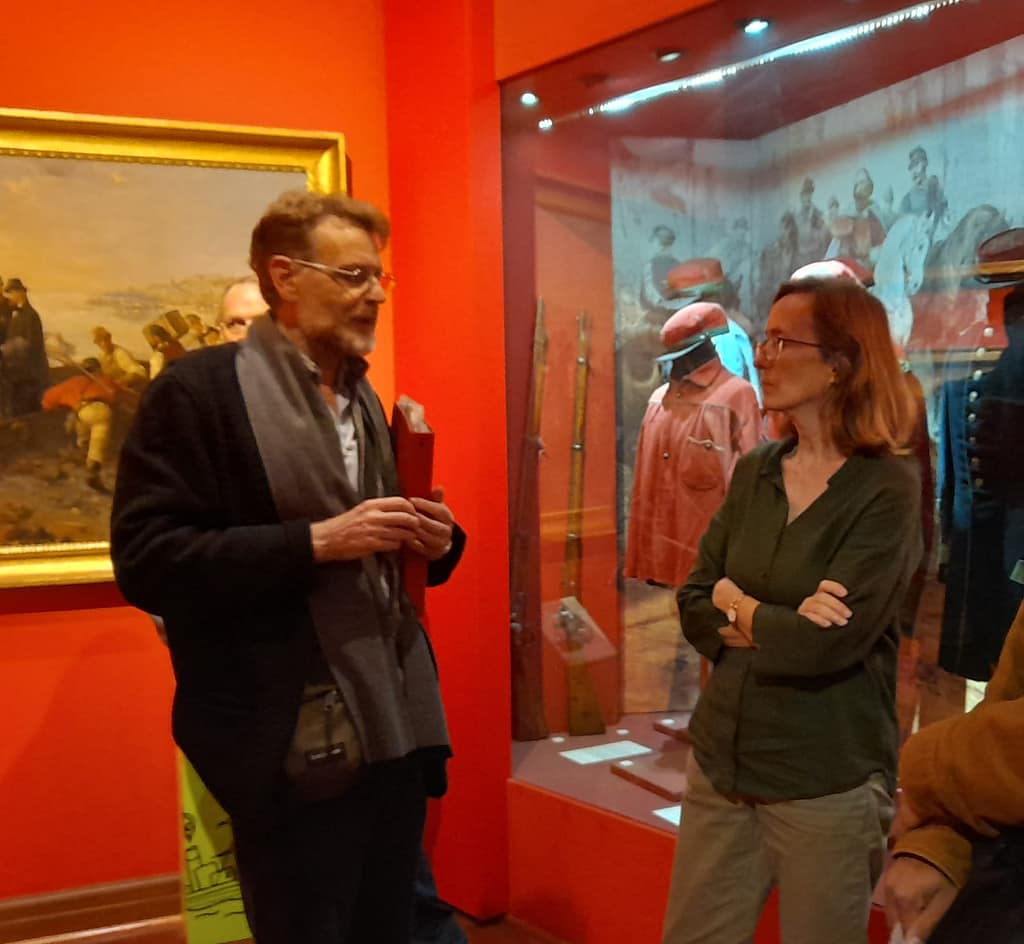
One of the highlights of the museum is the section dedicated to the “Cinque Giornate di Milano” (Five Days of Milan), the famous uprising of March 1848 when the citizens of Milan rebelled against Austrian rule. Paintings and artifacts from those days show the barricades, the tricolore flags, and the unity among people from all walks of life — workers, students, artists, priests, and women.
Marco was particularly moved by a display showing a handwritten note that reads: “Per l’Italia libera, anche noi milanesi combatteremo.” (“For a free Italy, we Milanese will fight too.”)
It’s one of those moments when language meets history. The word “libera” — free — is not just a word in a dictionary. It becomes something alive, something you can feel. For anyone studying Italian, that connection between vocabulary and emotion makes learning unforgettable.
5️⃣ From the battlefield to the classroom
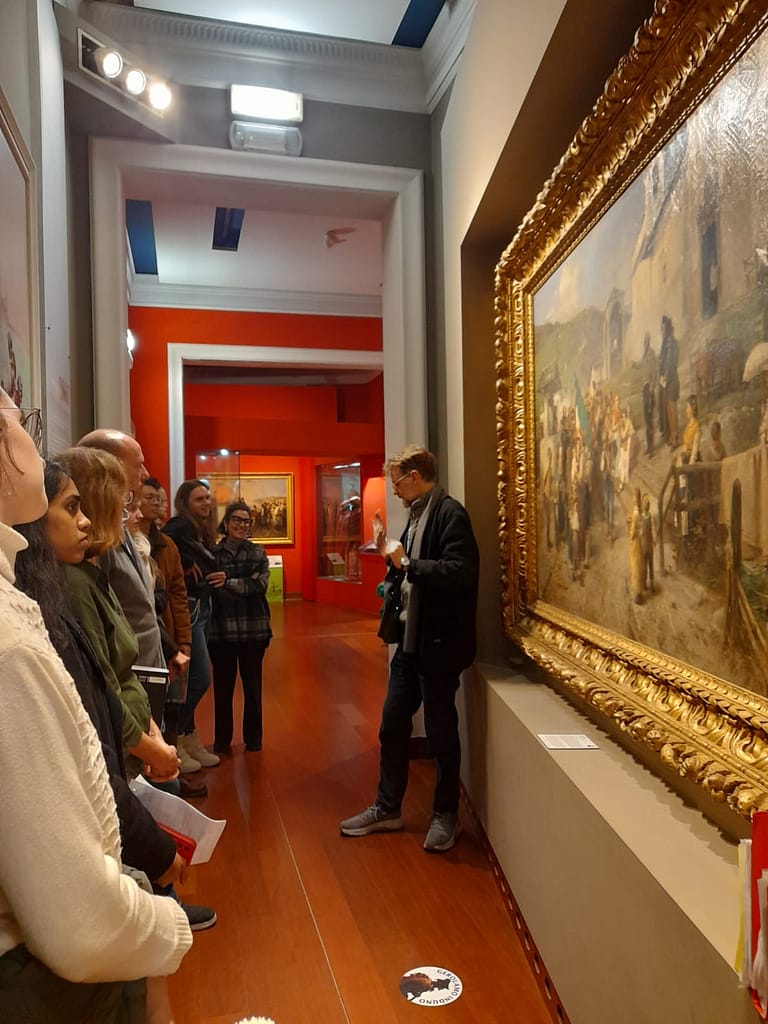
The museum’s later rooms cover the wars that eventually led to Italy’s unification in 1861. You can see uniforms from the army of the Kingdom of Sardinia, letters from soldiers who fought in Lombardy and Veneto, and even personal belongings of King Victor Emmanuel II and Garibaldi himself. The final displays celebrate the symbolic moment when Rome became the capital of a united Italy in 1870.
Marco, walking through the exhibits, realized how each object tells a story — not just of soldiers and kings, but of ordinary Italians who believed in education, progress, and the idea of a shared language. In fact, before unification, very few Italians actually spoke what we now call “Italian.” They spoke local dialects. The Risorgimento wasn’t only a political revolution — it was also a linguistic one.
That’s why learning Italian today is more than mastering grammar rules. It’s understanding how language grew out of those centuries of struggle, poetry, and hope.
6️⃣ Learning Italian through history and culture
At Il Centro, we often tell our students that Milan is their classroom — and places like the Museum of the Risorgimento are living lessons. When you walk through its halls, you’re surrounded by the origins of modern Italian vocabulary: words like “patria,” “libertà,” “unità,” and “indipendenza.”
These are not abstract concepts. They are part of daily Italian speech, in expressions such as “amore per la patria” (love for the homeland) or “spirito di libertà.” Visiting the museum gives you a deeper sense of why these words matter — and why Italians still use them with pride.
For students learning Italian in Milan, cultural activities like this one are a fundamental part of the experience. They connect what you learn in class — grammar, conversation, listening — with the living heritage around you. As Marco said after the visit: “When you see the flag, the letters, the portraits… you start to understand why Italians speak the way they do. Every word has a story.”
7️⃣ Palazzo Moriggia: beauty and history combined
Before leaving, Marco took a moment to admire the building itself. Palazzo Moriggia is a gem of neoclassical architecture. The symmetry of its facade, the elegance of the courtyard, and the light filtering through its high windows make the museum a peaceful place of reflection. It’s also a reminder of how Milan blends history and modernity so naturally — a city where past and present coexist within a few streets.
Outside, just a short walk away, you find the lively Brera district, with its art galleries, cafés, and narrow streets full of life. It’s easy to imagine that the same spirit of creativity that animated the patriots of the 19th century still flows through the neighborhood today.
8️⃣ Why it matters today
The Museum of the Risorgimento isn’t only about the past. It helps us understand Italy’s present identity — and how its language reflects that journey. Every language carries a sense of history within it, but Italian perhaps more than most. The ideals of unity, independence, and dignity that inspired 19th-century Italy are still visible in the way Italians communicate — with passion, with expressiveness, and with a strong sense of belonging.
For international students, especially those who come to Milan to study Italian, visiting museums like this one adds depth to the learning process. It’s one thing to read about “il Risorgimento” in a textbook, and another to see the actual letters, weapons, and portraits that tell its story. Language becomes tangible, connected to real people and emotions.
9️⃣ From classroom to city: learning beyond books
At Il Centro, cultural activities are designed to make students experience Italian beyond the classroom — through guided visits, walks, aperitivi, and events that combine language with art, history, and everyday life. Marco’s visit to the Museum of the Risorgimento is just one example of how immersion in culture can make learning richer and more memorable.
Every week, the school organizes a free cultural activity, such as a guided visit or an informal aperitivo, included in the course price. These experiences allow students to practice Italian in real contexts and discover the city at the same time.
In Marco’s words:
“Studying Italian in Milan is like living inside a history book — but one full of color, music, and espresso.”
🔍 Plan your visit
-
- Museum: Museo del Risorgimento di Milano
-
- Address: Via Borgonuovo 23, Milan – a few steps from Il Centro
-
- Opening hours: Tuesday to Sunday, 10:00 a.m.–5:30 p.m. (closed Mondays)
-
- Admission: Free entry
-
- Website: museidimilano.it
-
- YouTube video: Napoleone a Milano – Un liberatore o un razziatore?
✨ Learning Italian is not just about words
Learning Italian is not just about words — it’s about discovering the spirit behind them like like learning Italian though history in Milan. The Museum of the Risorgimento tells the story of how a country found its unity and its voice. For our students, walking through its rooms is a reminder that language and history are inseparable. Each verb tense, each idiom, carries echoes of the past — of those who dreamed, fought, and built the Italy we know today.
So, next time you’re in Milan, take a short walk from Via Borgonuovo to Palazzo Moriggia. Step inside, listen to the whispers of the past, and let them teach you Italian in a way no classroom ever could.