

What is a typical day in Italy really like? From a light breakfast with cappuccino and pastry to a long dinner shared with friends, Italian daily life follows a rhythm shaped by food, culture, and tradition.
In this guide, you’ll explore the Italian lifestyle step by step: breakfast, work, lunch, aperitivo, and dinner. It’s a journey into Italian cuisine, meal times, and habits that make the Bel Paese so unique.
What makes an Italian day unique
A typical day in Italy is not just about the clock, it’s about the people, the food, and the traditions that bring them together.
Italians love to spend time at the bar for coffee, to gather with family at lunch, and to enjoy evenings with friends.
Every meal is more than food, it’s a moment of connection. From seasonal fruits on the table to regional dishes prepared with fresh ingredients, every part of the day reflects Italian culture.
Italian breakfast: a sweet and simple start
A typical Italian breakfast (colazione) is quick, sweet, and simple. Italians eat a light breakfast: usually just a cappuccino or espresso at the bar with a pastry. At home, they may have bread with jam, biscuits, or orange juice. Eggs and meat are rare at this time of the day.
Unlike heavier morning meals elsewhere, the first meal in the Italian diet is short and sweet, just enough to avoid being hungry before lunch.
Breakfast essentials:
- Coffee (espresso or cappuccino)
- Cornetto (pastry)
- Bread with butter and jam
- Biscuits or seasonal fruits
- Orange juice (optional)

Morning routine: work, study and daily errands
After breakfast, Italians head to work, university, or school. Offices open around 9 am, while children start earlier. Many people commute by metro, bus, or scooter.
Mid-morning, they often return to the bar for another quick espresso. It’s more than just caffeine, these coffee breaks are moments of Italian culture where colleagues chat, laugh, and connect.
Lunch in Italy: the main meal of the day
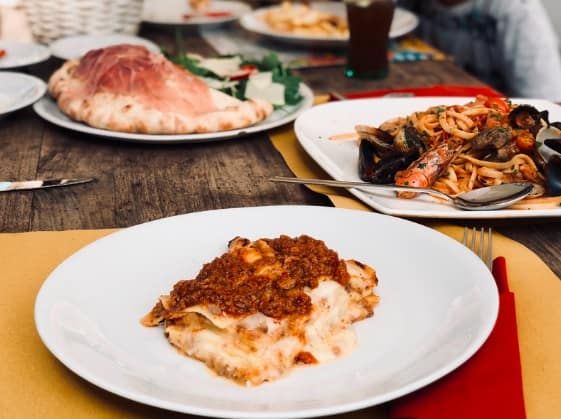
Lunch (pranzo) is traditionally the most important meal in Italy. For many, it’s the real highlight of the day. A typical Italian lunch often has two courses:
- First course (primo piatto): pasta, risotto, or soup with tomato sauce, seasonal vegetables, or cheese.
- Second course (secondo piatto): meat, fish, or eggs, often with a side dish like salad or grilled vegetables.
Meals are usually served with fresh bread and olive oil. Many Italians drink a glass of wine or water. And of course, dessert may be seasonal fruits or gelato.
If you want to go deeper into how food helps you learn the language, check out our guide on learning Italian through cooking.
Example of a typical Italian lunch:
- First course: Italian pasta with tomato sauce
- Second course: Chicken with roasted vegetables
- Side dish: Green salad
- Wine: A small glass of red or white
- Dessert: Seasonal fruits or tiramisù
In smaller towns, meal times for lunch can last up to two hours, especially on Sundays, when Italians order multiple dishes in a restaurant.
Afternoon life: from shopping to passeggiata
Afternoons in Italy are for errands, shopping, and sometimes a small snack. Children often return from school around lunchtime or early afternoon and may have a quick bite before homework.
Typical Italian snacks are simple but tasty:
- A slice of bread with tomatoes and olive oil (pane e pomodoro)
- Fresh seasonal fruits like peaches, oranges, or figs
- A small portion of cheese or salad
- A scoop of gelato
- Or even something salty like potato chips
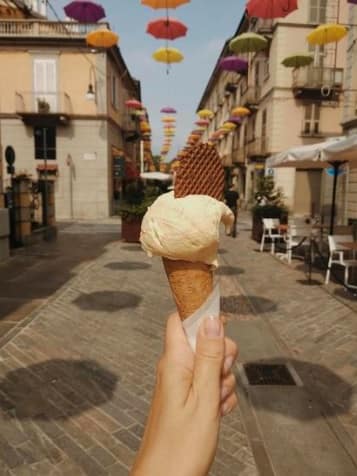
Many Italians eat these quick bites to keep their energy up until dinner, especially if they skipped a full typical Italian lunch.
Later in the day, the passeggiata begins: a leisurely stroll through the town center, often with family or friends. It’s not just about walking, it’s about being seen, socializing, and enjoying the atmosphere of the piazza.
Cultural tip: During the passeggiata, many Italians order a small coffee or even a sweet snack at the local bar. It’s a perfect way to combine food, culture, and conversation in one daily ritual.
Aperitivo: the Italian way to relax
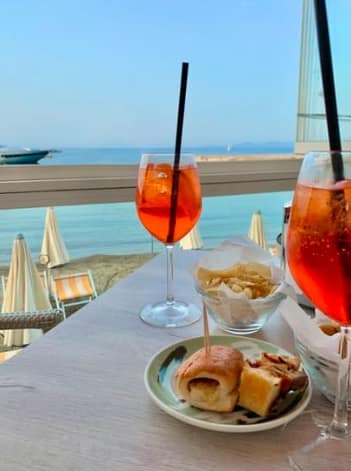
By early evening, it’s time for aperitivo, a small pre-dinner ritual that has become a symbol of Italian culture. Italians drink cocktails like the Spritz, beer, or wine, paired with salty snacks.
Typical aperitivo spread:
- Olives and cheese cubes
- Potato chips and focaccia
- Small sandwiches with tomatoes and mozzarella
- Cold cuts and seasonal fruits
Aperitivo is about taste, but also about slowing down, meeting friends, and enjoying the moment.
Dinner in Italy: family, food and conversation
Dinner (cena) is often lighter than lunch but still rich in flavor. Families gather around the table for pizza, meat, fish, or vegetables. A typical Italian dinner may include a first course of pasta, followed by a main course with a side dish, plus bread and wine.
In different regions of Italy, the evening meal varies:
- In Tuscany, soup with beans and olive oil.
- In Naples, pizza with mozzarella and tomatoes.
- In coastal towns, clams and fresh fish.
Dinner can last over two hours, especially with family or friends. It’s not just eating, it’s conversation, laughter, and the joy of sharing delicious food.

Evening activities: culture, friends and leisure
After dinner, evenings in Italy are for leisure. Some watch football, others enjoy dessert or another espresso at the bar. Many go out with friends, stroll in the piazza, or attend concerts.
In cities, nightlife means bars, clubs, and music. In smaller towns, evenings are quieter but no less social. Whatever the setting, Italians end their typical day with connection, culture, and good company.
A typical Italian day in 5 steps
- Italian breakfast with coffee and pastry.
- Morning of work or study with a quick espresso break.
- Typical Italian lunch with two courses and fresh ingredients.
- Afternoon passeggiata or snack.
- Aperitivo and long dinner with family or friends.
This step-by-step guide captures the essence of the Italian diet and Italian lifestyle in just one day.
FAQ – A typical day in Italy
What do Italians eat for breakfast?
Italians eat a light breakfast with cappuccino, espresso, or orange juice, usually paired with a pastry or bread with jam.
What is the most important meal in Italy?
Lunch is the important meal of the day, often with two courses (pasta or risotto followed by meat or fish) and served with fresh ingredients.
Do Italians really drink wine every day?
Many Italians drink a small glass of wine with lunch or dinner, though habits vary by different regions.
What is a typical Italian dinner?
A typical Italian dinner may include a first course of pasta or soup, a second course of meat or fish with a side dish like salad or vegetables, and dessert such as seasonal fruits.
Why do Italians love long meals?
Because meals are about more than food, they’re about family, friends, conversation, and enjoying the Italian lifestyle.
Conclusion
A typical day in Italy revolves around Italian food, family, and tradition. From a quick Italian breakfast with coffee to a typical Italian lunch with two courses and a long evening dinner, the rhythm of daily life is shaped by Italian cuisine and meal times.
Living like an Italian means enjoying fresh ingredients, taking time to eat lunch with others, and ending the day with wine, pizza, or a delicious home-cooked meal. It’s a way of life that combines taste, culture, and connection.
Want to experience this lifestyle yourself?
At Il Centro Italian School in Milan, you can join our in-person Italian courses and discover everyday life in Italy step by step. Practice the language, learn the culture, and live the authentic Italian lifestyle right here in Milan.