

How long should you study Italian in Italy? The answer depends on your starting level, your goals and how intensively you study. A traveller who wants to manage everyday conversations may need only a short course, while a student preparing for university, work or a long stay will need a more structured learning path.
Studying in Italy can accelerate progress because lessons are reinforced by daily contact with the language. You hear Italian in cafés, shops, museums and on public transport, and every interaction becomes an opportunity to practise. However, progress remains individual: motivation, previous language-learning experience and regular use of Italian outside the classroom all make a difference.
How Many Lessons Do You Need to Improve Your Italian?
At Il Centro, students generally need 40 lessons to move from one school level or interlevel to the next. Each lesson lasts a full 60 minutes. For example, the progression is not simply Level 1 followed directly by Level 2: students move from Level 1 to Level 1/2 and then from Level 1/2 to Level 2, completing approximately 40 lessons at each stage.
Our internal levels are aligned with the Common European Framework of Reference for Languages, from A1 for beginners to C2 for highly proficient learners.
The number of weeks required therefore depends largely on the weekly intensity of your course:
- Intensive course: 20 lessons per week, so approximately 40 lessons in two weeks.
- Semi-intensive course: 12 lessons per week, so approximately 40 lessons in three to four weeks.
The 40 lessons apply to each individual passage—for example, from Level 2 to Level 2/3—not automatically to an entire CEFR band. To understand how our full levels and interlevels correspond to the CEFR, explore our complete Italian levels, syllabus and progression.
All study times are indicative. Progress varies according to the student’s starting point, attendance, individual pace, independent practice and opportunities to use Italian.
How Long Should You Study for Travel?
If your main goal is to travel around Italy and communicate in everyday situations, two to four weeks can provide a useful foundation. You can learn how to introduce yourself, order food, ask for information, understand prices and manage simple conversations.
A short course is especially effective when you use Italian after class. Even simple daily interactions help new vocabulary and structures become more natural and memorable.
How Long Should You Study for Work?
For professional purposes, the right duration depends on your job and current level. A learner who already has an intermediate foundation may make significant progress in four to eight weeks, particularly when focusing on speaking, listening and professional vocabulary.
Complete beginners should plan a longer pathway. Reaching a confident intermediate level requires time not only to study grammar and vocabulary, but also to develop the ability to respond spontaneously in meetings, telephone conversations and everyday workplace situations.
How Long Should You Study for University?
Students preparing for an Italian university generally need a solid intermediate or upper-intermediate level. They must be able to follow explanations, read academic material, take notes and participate in discussions.
If you already have an A2 or B1 level, an intensive programme can help you strengthen your skills before starting university. Beginners will normally need a longer course and should check the precise language requirements of their institution before choosing the duration.
How Long Should You Study for a Student Visa?
Students applying for a study visa usually require a long-term, full-time programme. The appropriate course length depends on the requirements communicated by the competent Italian Embassy or Consulate and on the student’s individual study plan.
Il Centro’s intensive programme includes 20 hours per week and can be attended for periods ranging from 1 to 48 weeks. We provide eligible students with the enrolment documents needed to support their application, but visa requirements and final decisions remain the responsibility of the relevant diplomatic authority.
Intensive or Semi-Intensive: Which Course Is Right for You?
The best format depends on how quickly you want to progress and how much time you can dedicate to lessons.
Choose an Intensive Italian Course if:
- you want to progress as quickly as possible;
- Italian is the main purpose of your stay;
- you are preparing for university or professional life;
- you need a full-time programme for a long-term study plan;
- you can attend every morning, Monday to Friday.
The Intensive Italian Language Course provides 20 hours per week, with four 60-minute lessons every morning from Monday to Friday.
Choose a Semi-Intensive Italian Course if:
- you want steady progress with a more flexible timetable;
- you are already familiar with some Italian;
- you want additional time for work, study or exploring Milan;
- you prefer classes three days per week rather than every day.
The Semi-Intensive Italian Course includes 12 hours per week: four lessons per day, three days a week. It is designed for non-beginners who want structured learning without a full-time commitment.
Why Does Studying in Italy Help You Progress Faster?
Classroom hours are only one part of the learning process. When you study Italian in Italy, the language continues outside school. You hear authentic pronunciation, encounter useful expressions and practise responding in real time.
Living in Milan also provides a wide variety of contexts in which to use Italian: cafés, markets, exhibitions, neighbourhoods and cultural events. This combination of structured teaching and everyday immersion helps students transform knowledge into practical communication.
What Does Learning Italian at Il Centro Really Look Like?
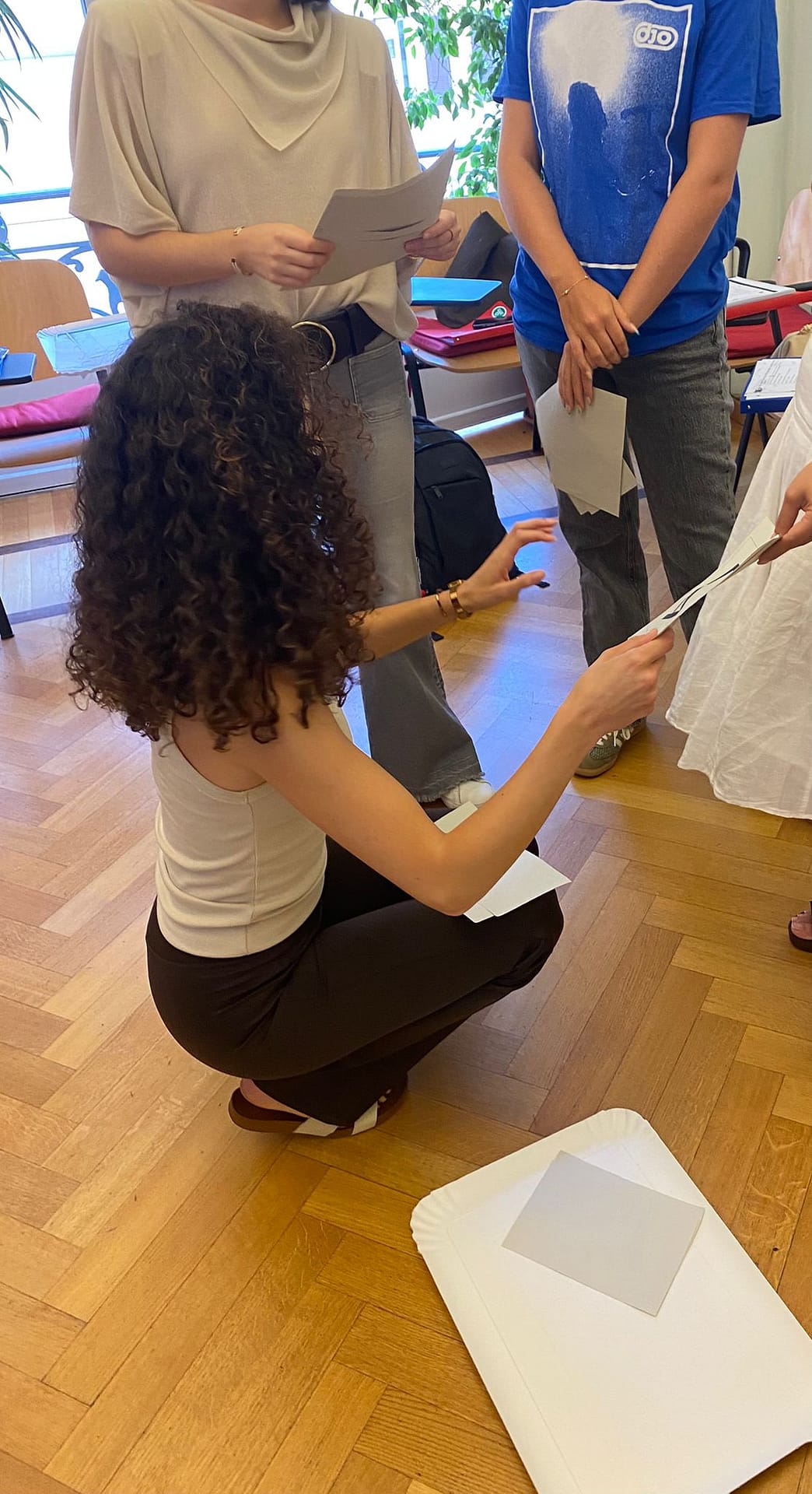
In our classrooms, learning Italian is an active and shared experience. Students do not simply listen to explanations: they speak, move, collaborate and immediately put new language structures into practice.
The photographs on this page show a real activity from one of our Level 1 classes. Students took part in a team competition focused on the Italian definite articles: il, lo, la, l’, i, gli and le. Working together, each team had to recognize, choose and combine the correct forms as quickly as possible.

A grammar point that can initially seem abstract becomes clearer when students can see it, handle it and solve it together. The competitive element makes the activity lively, but its real purpose is communication: learners explain their choices, listen to their teammates and learn from mistakes in a relaxed environment.

Our teachers regularly see how activities of this kind help students remember new structures and become less afraid of speaking. They also show why the number of lessons is only part of the answer: the way those lessons are taught has an important effect on progress.
How Can You Choose the Right Course Duration?
Before deciding how many weeks to study, consider four questions:
- What is your current Italian level?
- What level do you need to reach?
- How many hours can you attend each week?
- How much time will you have to practise outside class?
Students who already know some Italian can complete a placement test before arrival. This allows the school to recommend the most suitable class and provide a more realistic estimate of the time needed to reach the desired goal.
Plan Your Italian Learning Path in Milan
There is no universal answer to how long you should study Italian in Italy. Two weeks can create a strong foundation or refresh existing skills, while several months can support the transition towards independent, confident communication.
The most effective plan is one that matches your starting level, timetable and personal objective. Il Centro’s team can help you compare the available formats and choose a realistic duration for travel, work, university or a longer stay in Italy.